
What are the Critics Missing About This Moment?
The U.S. is in political turmoil, leading to backlash against the party establishments. To understand this, understand we are in the midst of a New Gilded Age. Will it lead to a new Progressive Era?

July 25 — We are in the midst of a massive political shift that is upending traditional politics and especially the establishment party structures. The outcome of this titanic shift likely will lead us to unknown places. But there are also historical parallels that seem to fit with the era we are in. This period seems to parallel what the U.S. looked like as we emerged from the Gilded Age in the late 1800s. Will this new Gilded Age lead to a new Progressive Era, or something else, is perhaps the most important question facing us now.
Generational and political shifts.
Political analysis shows that we are at a place now where the percent of people who identify with the two major political parties in the U.S. is at an historic low: in a recent poll 25% percent identified as Democrats, 25% as Republicans, and 45% as Independents. The percent who identify as independents has risen from 31% in 2004 to 45% in 2025; while the two parties lost seven percentage points each during the same period.

Perhaps most importantly, there are titanic shifts across the generations. About one third of baby boomers and the “silent generation” identifies as independent, with a plurality of the silent generation and Baby Boomers identifying as Republican (37% and 34%). But on the other hand, over half of GenZ (born 1997-2007) and Millennials (born 1981-1996) identify as independents; and only 17% of GenZ identifies as Republican and 27% as Democrat (this generation was first eligible to vote in the 2016 election). So clearly the youngest generation, who notably came to their teenage years as the Great Recession hit in 2008 and who remember vividly both 9/11 as well as the Iraq War, is rejecting the message of both parties.

The taking over of the Republican party by Donald Trump in 2016 certainly has led to titanic shifts in that party. Many prominent members of the party have left the party, other long-time stalwarts have been defeated, and the party’s long-time ideology seems to have disappeared. While the GOP long held views favoring capitalism and free markets, strong defense and foreign policy, and a strongly held belief of fiscal conservatism rejecting deficits, it is now the case that Trump’s GOP ignores deficits and has presided over large increases in government spending and skyrocketing deficits, rejects free markets in favor of tariffs, and rejects long time foreign alliances.

The rise of progressivism and “socialists”.
The continued insurgence and popularity of “socialists” and very progressive candidates is causing a political firestorm, bringing time-worn attacks from the right, but also some angst from mainstream Democrats. After the political popularity of Bernie Sanders and Elizabeth Warren led also to the election of Alexandria Ocasio-Cortez and other members of the “Squad,” the so-called “Democratic Socialists” have endorsed 150 candidates this cycle, and so far about three dozen have won their elections or primaries (34 have lost so far), and the stunning election of Mayor Mamdani in New York City caused a firestorm. Democratic socialist candidates had just toppled five incumbents, capturing two House primaries in the city and a handful more in state legislative races.
In the recent cycle Democrats were shocked by the sudden rise of popularity for Graham Platner (a party outsider) who was rejected by the party establishment, leading to a push by the party (including Senate Majority Leader Schumer) to nominate the sitting Governor, who is over 70 years old; leading to his victory in the primary (before his campaign imploded). In Wisconsin, after the sitting Governor has announced his retirement, an insurgent campaign from an avowed “Democratic Socialist” Francesca Hong, has seen her skyrocket into the lead in recent polls (if they are accurate) over two former Lt. Governors and other party insiders. So fearful of the outcome that the primary election may lead to the nomination of a “Democratic Socialist” the party establishment, including the sitting Governor came out and endorsed a candidate who had in fact dropped out of the primary just a few days earlier since he was at just 5% in the polls. The outcome of this tumultuous election is yet to be written.
So, what do we make of these titanic shifts?
I believe the pundits and politicians may be missing both the underlying dynamics of the electorate – especially how angry they are – but also an understanding of the historical parallels to this era.
Historic Parallels. When I look at this era, I see great parallels to the historic period Gilded Era in the late 1800s (1870-1900), which led right after the dawning of the Progressive Era (1900-20).
The remarkable accomplishment of the Civil War, which eradicated this country’s original sin of slavery, led unfortunately to the Reconstruction period and a backlash that led to a horrific era of racism, the founding of the KKK and Jim Crow. As the Industrial Revolution set in, this led to enormous wealth by corporate titans (e.g., Rockefeller, Mellon, Morgan, Carnegie). But the enormous accumulation of wealth into the hands of few, and hugs demographic migration to the industrial cities, to benefit from the Industrial Revolution and escape racism, led to enormous poverty and corruption. Notably, one of the favored policies in the late 1800s was tariffs. There was no safety net for the poor, who died at alarming numbers due to poverty, industrial accidents, public health challenges (infectious disease, lack of clean water, air, sewers).
What was the response to the Gilded Age, that corruption? Surprisingly, one of the richest families in the country, the Roosevelts, produced Teddy Roosevelt, who came to the Vice Presidency after holding a job as Governor of New York, and in 2001 became President after the assassination of William McKinley.
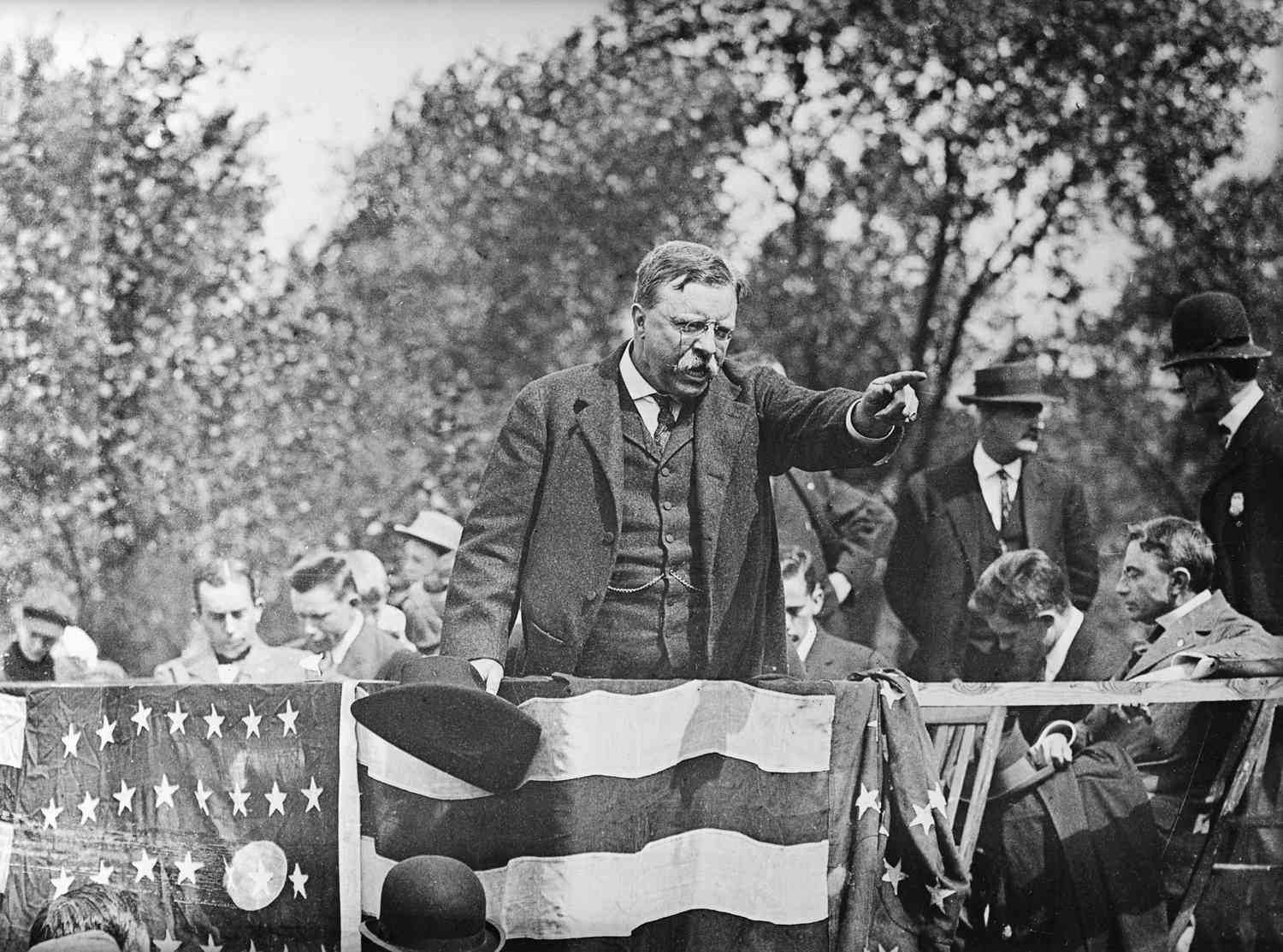
It is known that the elite wealth holders thought they had a friend in Teddy Roosevelt. Instead, he ushered in the Progressive Era. Armed with the support of the beleaguered poor and recent immigrants, who brought with them the ideas of how social welfare systems worked across Europe, Roosevelt and the progressives presided over a remarkable array of political reforms.
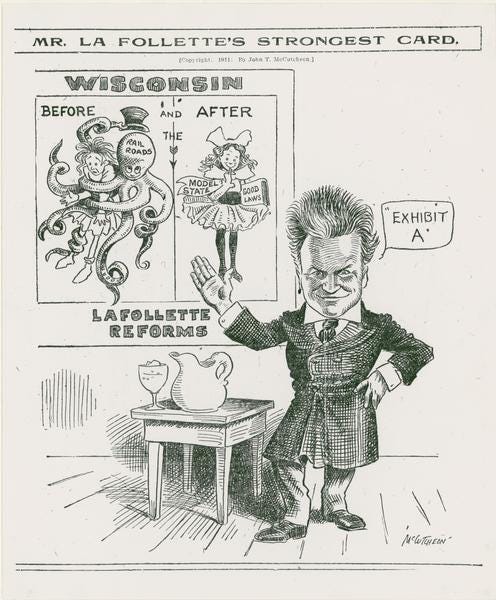
In Wisconsin, the Progressives were led by “Fighting Bob” Robert LaFollette. LaFollette had served in the US House from 1885-1891, and in 1901 as Teddy took over the Presidency, Lafollette became Governor of Wisconsin. He later served as a US Senator (1906-1925) and ran for President in 1924.
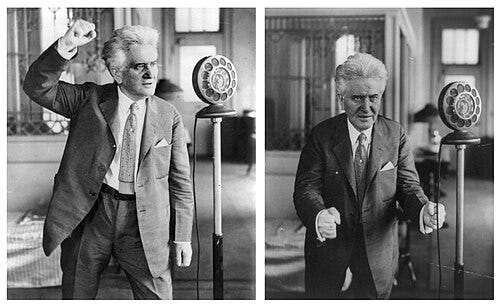
Under Lafollette, the progressives in Wisconsin brought in a remarkable array of social legislation we now take for granted: minimum wage, direct primary elections, women’s suffrage, worker’s compensation, child labor bans, breaking up of large corporations (trusts), regulation of monopolies. And the progressives, working with faculty from the University of Wisconsin’s economics department, led in an ushering of a remarkable array of social legislation (much of it already enacted in Europe), including social insurance for the aged, unemployed and poor (precursors to the Social Security and Medicare programs, unemployment insurance), a graduated income and inheritance tax, support for public education.
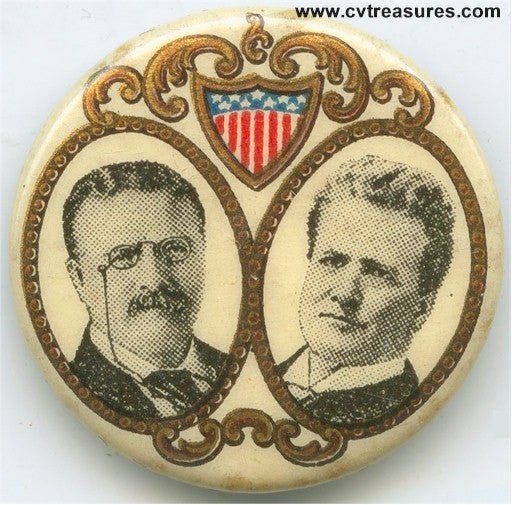
What Roosevelt, LaFollette and the progressives were not able to achieve in the 1900-1920 period, Teddy’s cousin Franklin Roosevelt ushered in many of the reforms after the onset of the Great Depression. While Teddy Roosevelt was a Republican, the Republican party splintered after his two terms, leading to the election of William Taft, who supported some progressive reforms but also pushed back in favor of corporate interests. When Teddy ran as an independent for President in 2012 against Taft, this led to the election of Woodrow Wilson, who argued he could take on the mantle of the progressives. But instead, he was likely on of the most racist Presidents ever to hold office, and he led the country into the ill-conceived First World War.
The repercussions of that failed decision, and a return to the conservative fiscal Republican policies in the 1920-28 period led to the Great Depression, the election of FDR and the enacting of most of the remaining pieces of the progressive platform developed in Wisconsin and other places. FDR also presided over the biggest political challenge our world has ever faced, with the rise of fascism across the planet, much of it thriving because of the problems not addressed after the end of WWI and the Depression. WWII led to a defeat of fascism.
So will this new Gilded Age lead to a progressive backlash?
The U.S. has been through at least two decades of turmoil, in a period that has included 9/11, two very unpopular wars (in Iraq and Iran), two major recessions (in 2008-10 and 2020), a major COVID-19 pandemic that led to millions dying, and a period of inflation and a rise in income inequality. Starting with the election of Ronald Reagan, the country was seen major swings in political power. The Democrats controlled both houses of Congress for 26 years; the House for 40 years from 1956 to 1996, and the Senate from 1956 to 1980. Since 1980, the Senate has changed party control nine times, and the House five times. The House and Senate now have the narrowest margins likely ever seen, evenly split between the Democrats and the GOP. If there is not a better metaphor for political division, that is it.

The struggles faced in the economy in the 2000-16 period led to a rising tension between those that held wealth, and those that did not (much like in the 1800s). The U.S. has seen three recessions since 2000, including two of biggest recessions since the Great Depression (2008-20 and in 2020). Major industrial change brought on a new technological revolution, and a globalization of the economy, eventually leading to the ending of a remarkable Post-WWI Industrial period, where the middle class thrived. After the oil crises of the 1970s, the industrial base fell apart, and income inequality thrived as the economy rewarded high-skilled workers, but not those without a college education. All this brought on rising inequality, and a broken safety net, leading to the passage of the Affordable Care Act (ACA) under President Obama, the final piece perhaps of the progressive platform started in the early 1900s. But these legislative accomplishments led to a backlash from the GOP, who tried over 60 times to repeal Obamacare. A long string of enacted legislation, including civil rights legislation enacted during the 1960-2008 period has led to a backlash from some members in the GOP.
It is into this tumultuous period that the Millennial Generation (born 1981-1996) and GenZ (1997-2007) came of age, these voters first voting around 2000. This generation knows little of (or did not live through) the post-WWII Cold War, the fight against communism, Vietnam. Their formative events are 9/11, two unpopular wars, two major recessions, the pandemic. There is a huge generational disconnect between these younger voters (now largely under 30 years old) and those over 50 years old, largely comprised of the baby boomers (born 1964-64) and the silent generation (born before 1946). Is it any surprise that there is huge political disconnect between these generations and their voters?
Into this turmoil, President Trump came in and cleverly exploited the anger of younger people (especially white males without a college education), rural voters, and even Latinos in the 2024 election. They all had struggled in the economy. Offering simple solutions worked to get him elected, but now that he is in office, the lack of attention to concerns about affordability, access to health care, corruption, income inequality and challenges to democracy now is leading to another backlash. Worse, we have seen a rise of the new Gilded Rich, including but not limited to Elon Musk, Jeff Besos, Mark Zuckerberg, Bill Gates who often times do not pay adequate attention to the needs of lower-wage workers, the young, and people of color.
The party establishments are very surprised that this is leading to a rejection of incumbents and an attraction to populism on the left and right. Rural voters are frustrated by their economic struggles, and more socially conservative, and respond to the solutions offered by MAGA. Younger voters are frustrated by the leadership of older politicians over age 70, who know more about the past battles (e.g. the fight against communism) than they seem to understand about current concerns. Remarkably, three of the last five presidents were born in the same year (1946): Clinton, GW Bush, and Trump, and one of them was born earlier (Biden in 1942). These presidents came into voting age during the 1960s and knew well the battles of Vietnam, the Civil Rights era, the War on Poverty, the Cold War, and the economic challenges that started in the 1970s. They seem less attuned to the concerns of the younger generation: inflation, lack of affordable housing and medical care, lack of economic opportunity.
Into this period arrive the new progressives, and yes those who call themselves “Democratic Socialists”. Candidates like Mayor Mamdani, and other insurgent progressives win primaries and elections, as they appeal especially well to younger voters, thriving in this environment. The outcome of other elections, such as the one in Wisconsin and Maine, may tell us a lot about where this political battle is heading.
Whether the new Gilded Age leads to a new Progressive Era, or something else, is yet to be written. Clearly, we are at a precipice, and political leaders who do not understand this may become victims to it, while leaders who understand this may thrive.
____
Views of the author alone.